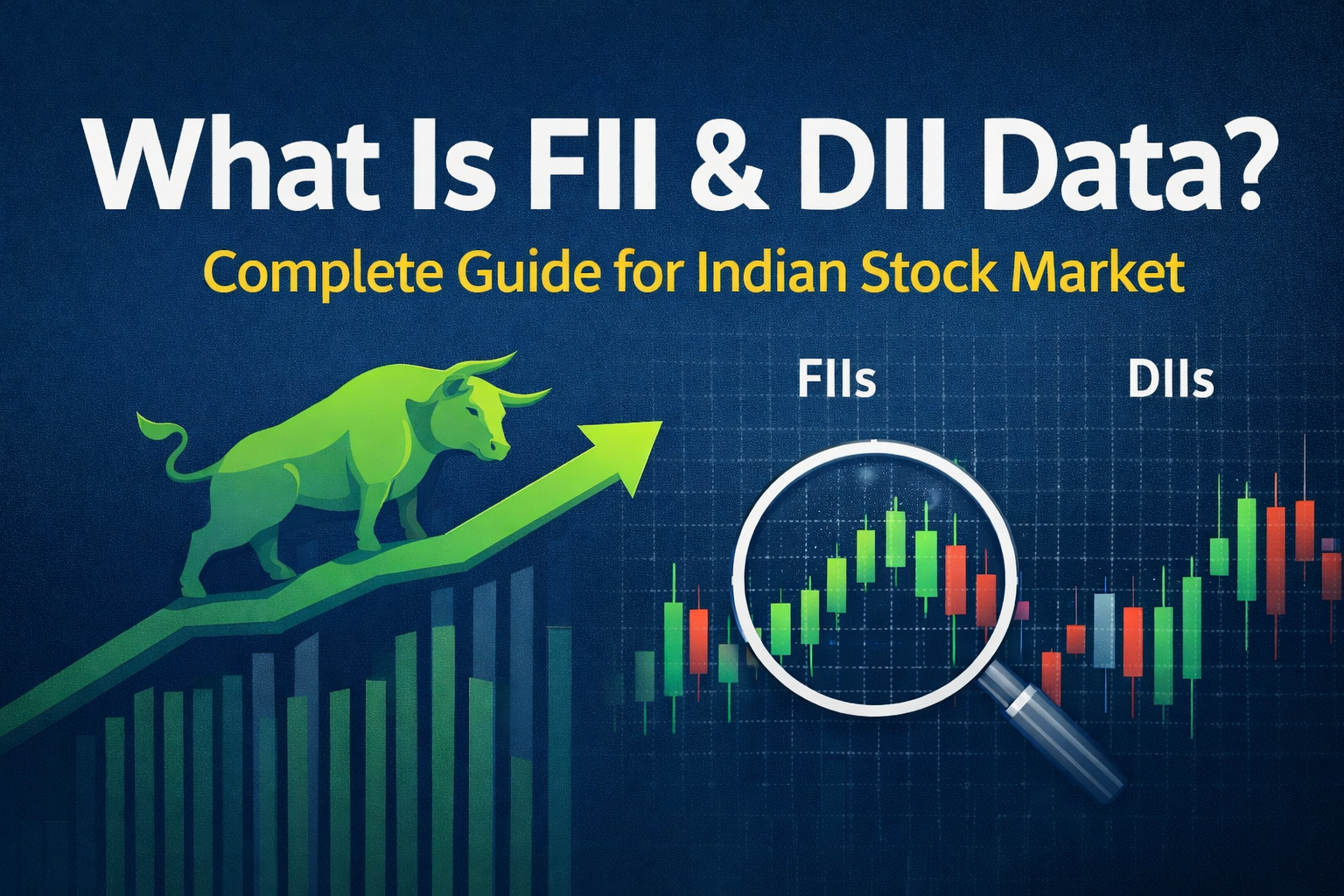
What is FII DII data? If you’ve been watching the Indian stock market closely, you’ll notice that big moves rarely happen without institutional money behind them. That’s exactly where FII and DII data comes into the picture.
This article isn’t a textbook definition. It’s a practical explanation of what FII & DII data means, why traders track it daily, and how you should actually use it.
First Things First: Who Are FIIs?
FIIs (Foreign Institutional Investors) are large investors based outside India. Think of global mutual funds, hedge funds, pension funds, and sovereign funds.
These players:
- Trade with massive capital
- Focus heavily on index derivatives
- React quickly to global events
Because of their size, even small shifts in FII positioning can move Nifty or Bank Nifty.
Then Who Are DIIs?
DIIs (Domestic Institutional Investors) are Indian institutions — mainly:
- Mutual funds
- Insurance companies (like LIC)
- Banks and financial institutions
DIIs usually invest with a longer-term view. During market corrections, they often step in when FIIs pull money out. That’s why many market falls stop sooner than expected.
So What Exactly Is FII & DII Data?
Every trading day, exchanges publish how much FIIs and DIIs:
- Bought
- Sold
- And their net position
This data is available for:
- Cash market
- Futures
- Options
In simple terms, FII & DII data tells you where big money was active during the day.
Why Traders Obsess Over This Data
Retail participation is large in number, but institutions still control direction and volatility.
Traders track FII & DII data to:
- Understand market mood
- Confirm trends
- Spot early signs of risk
- Avoid getting trapped in false moves
Used properly, it adds context to price action.
Reading FII & DII Data in the Cash Market
Cash market data shows net buying or selling value.
Here’s how traders usually read it:
- FII net buying → Positive undertone
- FII net selling → Caution, not panic
- DII buying during FII selling → Strong support zone
But here’s the catch — cash data alone doesn’t tell the full story anymore.
Why Derivatives Data Matters More Today
In recent years, FIIs shifted most of their activity to Futures & Options.
In F&O data, you’ll see:
- Index futures long vs short positions
- Call and put option buying / writing
This is where real intent often shows up.
Example:
- FIIs selling cash but building index longs → Hidden bullishness
- FIIs buying puts aggressively → Hedging or fear
This is why serious traders always look beyond cash numbers.
Impact on Nifty and Bank Nifty
FIIs dominate index derivatives. Because of this:
- Heavy FII short positions often pressure indices
- Long build-ups support rallies
- Option positioning controls intraday volatility
DIIs, on the other hand, provide stability during sell-offs.
Common Mistakes Retail Traders Make
Many traders misuse FII & DII data. The most common mistakes:
- Reacting to a single day’s numbers
- Ignoring derivatives positioning
- Assuming FII selling means a crash
- Trading without price confirmation
This data works best when used as a background indicator, not a trigger.
How Professionals Actually Use This Data
Experienced traders don’t chase headlines. They:
- Track 3–5 day trends in FII activity
- Combine it with:
- Price structure
- Open Interest
- Volatility
- Separate hedging trades from directional bets
This helps them stay aligned with smart money, not emotions.
Is FII & DII Data Enough on Its Own?
No — and that’s important to understand.
FII & DII data is powerful, but it’s not a buy/sell signal by itself. It works best when combined with:
- Technical levels
- Market structure
- Risk management
Think of it as a compass, not a GPS.
You can also explore our daily FII DII analysis to understand how institutional data changes every trading session.
FAQs
Is FII & DII data released daily?
Yes. It’s published after market hours by NSE.
Can beginners use this data?
Yes, if they focus on trends rather than daily noise.
Why does the market rise even when FIIs sell?
Because selling may be hedged, or DIIs may be absorbing supply.
Is derivatives data more important than cash data?
For short- to medium-term trading, yes.
Where can I follow daily analysis easily?
Platforms like FiiDiiPro simplify daily institutional data.
Our earnings concall analysis using Good, Bad, Improving and Worsening helps decode management commentary clearly.
Final Thoughts
FII & DII data doesn’t predict the market.
It explains behavior.
When you understand how institutions think, your trading decisions become calmer, clearer, and more disciplined.
Disclaimer:
This content is for educational purposes only. We are not SEBI-registered investment advisors. Market investments involve risk.
Institutional flow data is published daily by the National Stock Exchange (NSE) and is widely used by professional traders.